
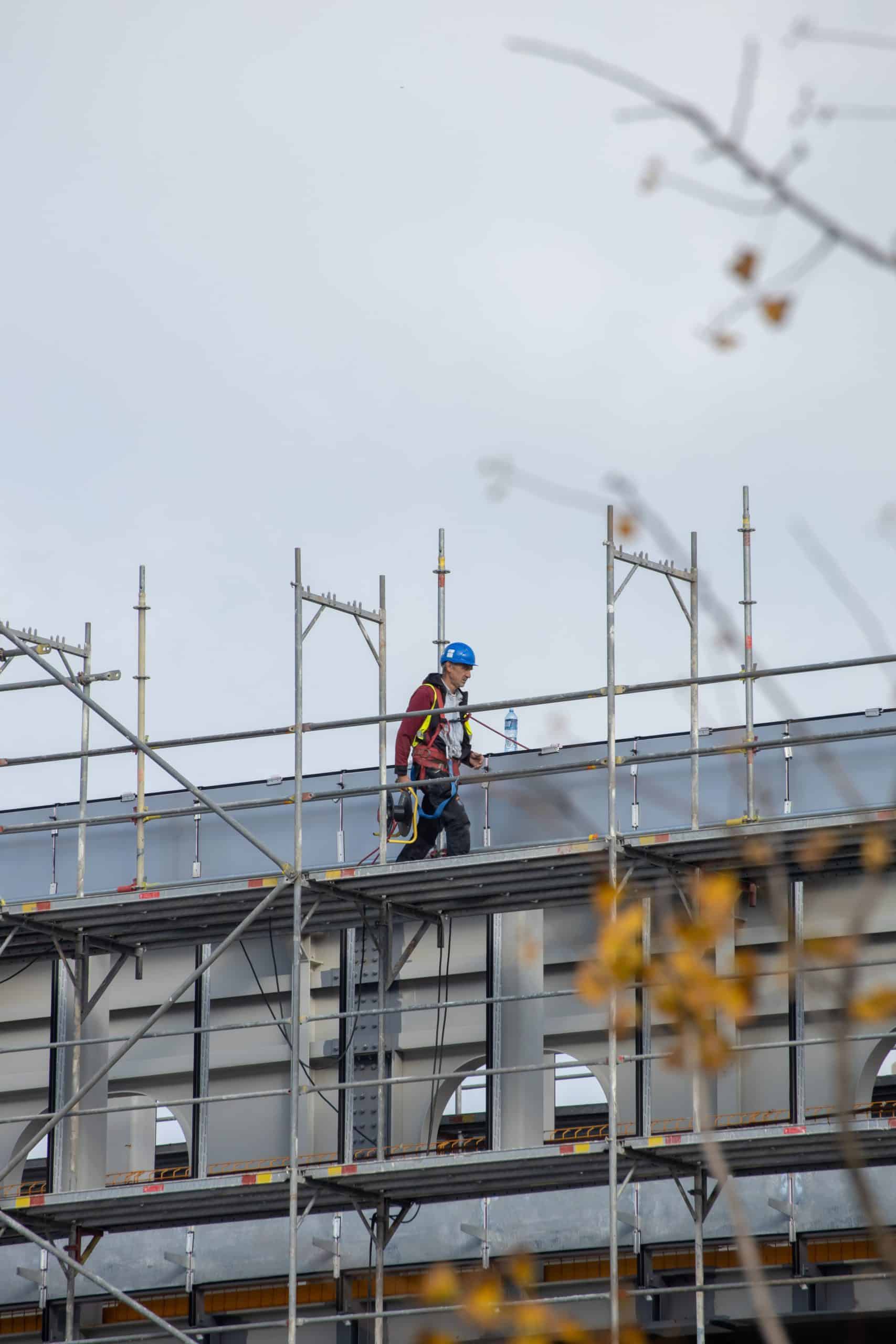
Construction sites across Queensland are constantly evolving environments, with workers regularly required to perform tasks on roofs, scaffolding, ladders, elevated work platforms, and partially completed structures. While working at heights is often unavoidable, falls from height continue to be one of the leading causes of serious injuries and fatalities in the construction industry.
Whether it’s a fall from a roof edge, through a skylight, from scaffolding, or from an unsecured ladder, the consequences can be devastating for workers, their families, and businesses. Understanding the risks and implementing effective controls is essential for creating safer construction sites and meeting workplace health and safety obligations.
The Reality of Falls from Heights
A fall from height can occur whenever a person works in a position where there is a risk of falling from one level to another. Even falls from relatively low heights can result in serious injuries such as fractures, spinal injuries, traumatic brain injuries, and, in some cases, fatalities.
Common scenarios that lead to falls on Queensland construction sites include:
- Working near unprotected edges
- Roof installation and maintenance activities
- Inadequately secured scaffolding
- Misuse of ladders
- Falls through fragile roofing materials or skylights
- Unsafe use of elevated work platforms
- Poor housekeeping creating trip hazards near edges
- Lack of fall protection systems
Many incidents occur because hazards were not properly identified, controls were missing, or workers were not adequately trained and supervised.
Legal Responsibilities for Managing Fall Risks
Under Queensland workplace health and safety laws, persons conducting a business or undertaking (PCBUs) have a duty to eliminate risks to health and safety so far as is reasonably practicable. Where elimination is not possible, risks must be minimised using appropriate control measures.
Construction businesses must assess the risk of falls before work begins and implement controls that provide the highest level of protection possible.
Controlling the Risk of Falls: The Hierarchy of Controls
Managing fall hazards should follow the hierarchy of controls, prioritising the most effective measures first.
-
Eliminate the Need to Work at Height
The most effective control is to remove the hazard entirely.
Examples include:
- Prefabricating components at ground level before installation
- Using extendable tools to perform tasks from the ground
- Redesigning work processes to avoid elevated access
If the work can be completed safely without leaving the ground, the risk of falling is eliminated.
-
Use Passive Fall Prevention Systems
Passive controls provide protection without requiring active worker intervention.
Examples include:
- Edge protection and guardrails
- Scaffold systems with integrated guardrails
- Safety mesh beneath roof structures
- Temporary barriers around openings
- Covered floor penetrations and service openings
These controls are generally preferred because they provide continuous protection for all workers on site.
-
Use Work Positioning or Fall Restraint Systems
Where passive protection is not reasonably practicable, fall restraint systems may be used to prevent workers from reaching a fall hazard.
Examples include:
- Travel restraint systems
- Anchored restraint lines
- Work positioning systems
These systems are designed to prevent a worker from reaching an exposed edge rather than arresting a fall after it occurs.
-
Implement Fall Arrest Systems
Fall arrest systems should only be used when higher-level controls are not reasonably practicable.
Examples include:
- Safety harnesses and lanyards
- Inertia reel systems
- Anchor points and lifelines
- Catch platforms
- Safety nets
It is important to remember that fall arrest systems do not prevent a fall, they reduce the consequences if one occurs. Rescue procedures must also be in place to ensure a suspended worker can be recovered quickly.
-
Use Administrative Controls
Administrative controls support physical safety measures and help ensure work is performed safely.
Examples include:
- Safe work method statements (SWMS)
- Site-specific risk assessments
- Permit-to-work systems
- Worker training and competency verification
- Toolbox talks
- Regular inspections and maintenance
- Effective supervision
- Clear exclusion zones
Administrative controls should never be relied upon as the sole method of protection where a risk of falling exists.
Ladder Safety: A Common Area of Concern
Ladders are involved in many fall-related incidents on construction sites. While ladders can be useful for short-duration tasks, they should not be used as a primary work platform where safer alternatives are available.
To improve ladder safety:
- Select the correct ladder for the task
- Ensure ladders are in good condition
- Place ladders on stable ground
- Maintain three points of contact
- Secure ladders where possible
- Avoid overreaching
- Use scaffolding or elevated work platforms for longer-duration work
Planning Is Critical
Effective planning is one of the most important factors in preventing falls.
Before commencing work at height, construction businesses should consider:
- The height at which work will occur
- The duration and complexity of the task
- Environmental conditions such as wind and rain
- Access and egress requirements
- Emergency and rescue procedures
- The competency of workers performing the task
- Inspection requirements for equipment and systems
A well-planned job significantly reduces the likelihood of incidents occurring.
Creating a Strong Safety Culture
Physical controls alone cannot prevent every fall. A strong safety culture encourages workers to identify hazards, report concerns, and stop work when conditions become unsafe.
Construction companies that prioritise safety typically experience:
- Fewer incidents and injuries
- Reduced project disruptions
- Improved workforce morale
- Better regulatory compliance
- Lower financial and reputational risk
When workers feel empowered to raise concerns and safety is embedded into everyday operations, fall risks are more effectively managed.
Final Thoughts
Falls from heights remain one of the most significant hazards on Queensland construction sites. However, many incidents are preventable through proper planning, risk assessment, worker training, and the implementation of effective control measures.
By prioritising elimination, using appropriate fall prevention systems, maintaining equipment, and fostering a strong safety culture, construction businesses can significantly reduce the risk of serious injury and ensure workers return home safely at the end of every shift.
From July 2026, Workplace Health and Safety Queensland (WHSQ) inspectors will visit construction sites across Queensland as part of a compliance campaign focused of work at heights, where they will assess workplace health and safety and take action if non-compliance is identified.
Sherm Software can help you to ensure your business has the right controls in place to manage the risk of falls when working at heights. Training and competency verification can be completed with notification sent when it is due, permits are maintained within the workers profile, regular workplace inspections can be completed electronically using Sherm’s Mobile App, SWMS are made readily available anywhere at any time, and many other features to help keep your business compliant.