
Work Health and Safety Risk Management Strategies

Introduction

Work Health and Safety (WHS) is a fundamental aspect of business operations, ensuring that workplaces remain safe and free from hazards that could cause injury, illness, or death. The WHS framework is governed primarily by the Model Work Health and Safety Act (2011), which has been adopted by most states and territories. This legislation places a legal obligation on businesses and individuals to identify, assess, and manage risks to protect workers and others from harm. Effective WHS risk management strategies are essential for compliance, employee wellbeing, and organisational sustainability.

  1. The Legislative Framework

The Model WHS Act and Regulations, developed by Safe Work Australia, provide a nationally consistent approach to managing workplace health and safety. Key elements include:

  • Primary Duty of Care: Employers, or Persons Conducting a Business or Undertaking (PCBUs), must ensure, as far as reasonably practicable, the health and safety of workers and others affected by their operations.
  • Consultation Requirements: PCBUs must consult with workers and health and safety representatives (HSRs) on matters that affect their health and safety.
  • Due Diligence: Officers (such as company directors) must demonstrate proactive management of WHS risks.

Each state and territory enforces these laws through its own regulatory authority, such as SafeWork NSW, WorkSafe Victoria, and WorkSafe Queensland.

  1. The Risk Management Process

The WHS risk management process follows a systematic approach outlined in the Code of Practice: How to Manage Work Health and Safety Risks. The four key steps are:

Step 1: Identify Hazards

This involves recognising potential sources of harm, such as physical hazards (machinery, noise), chemical hazards (toxic substances), biological hazards (infections), psychosocial hazards (stress, bullying), and ergonomic hazards (poor workstation design). Hazard identification can be done through workplace inspections, incident reports, and worker consultation.

Step 2: Assess Risks

Risk assessment determines the likelihood and consequence of harm occurring. Tools such as risk matrices help organisations prioritise which risks require immediate control. While not always mandatory, formal risk assessment is recommended for complex or high-risk tasks.

Step 3: Control Risks

The hierarchy of control is a key WHS principle used to eliminate or minimise risks. It prioritises control measures as follows:

  1. Elimination – Remove the hazard entirely.
  2. Substitution – Replace the hazard with something safer.
  3. Engineering Controls – Isolate people from the hazard.
  4. Administrative Controls – Change the way people work (e.g., procedures, training).
  5. Personal Protective Equipment (PPE) – Use protective gear as a last resort.

Step 4: Review and Monitor Controls

Risk control measures must be regularly reviewed to ensure they remain effective, particularly after incidents, workplace changes, or the introduction of new equipment or processes.

  1. Key Strategies for Effective WHS Risk Management

To embed WHS risk management within organisational culture, the following strategies are recommended:

  • Leadership and Commitment: Senior management must demonstrate visible commitment to WHS through policies, resources, and active participation.
  • Worker Involvement: Engaging workers in decision-making fosters a safety culture and improves hazard identification and compliance.
  • Training and Education: Ongoing WHS training ensures that workers understand risks and know how to manage them effectively.
  • Incident Reporting and Investigation: A transparent reporting system encourages early identification of hazards and prevents recurrence.
  • Use of Technology: Digital WHS management systems and real-time monitoring tools enhance data collection, risk assessment, and compliance tracking.
  • Continuous Improvement: Organisations should use performance indicators and audit results to improve their WHS systems continuously.
  1. Emerging WHS Challenges

Modern workplaces face new challenges that require adaptive risk management strategies, including:

  • Psychosocial Risks: Managing mental health, workplace stress, and harassment.
  • Remote and Hybrid Work: Ensuring home office safety and ergonomic compliance.
  • Automation and AI: Addressing safety risks linked to human-machine interaction.
  • Climate Change: Mitigating heat stress, air quality issues, and extreme weather impacts on outdoor workers.

Conclusion

Effective Work Health and Safety (WHS) risk management is not only a legal obligation but also a cornerstone of sustainable business practice. By systematically identifying, assessing, controlling, and reviewing workplace risks, organisations can protect their workforce, enhance productivity, and foster a positive safety culture. As the nature of work continues to evolve, businesses must remain proactive, innovative, and compliant in managing health and safety risks for all.

If you are unsure as to what potential risk exposures your organisation may be facing, get in touch with us today. At Safety for Life we provide practical assistance in the development of an effective Risk Management Program and strategies to assist you to minimise your risk exposures.

If you are considering a safety software application for the management of risk, then please consider Sherm. Sherm Software is an essential safety management system for your organisations WHS Risk Management. Worker involvement, training and incident reporting and investigation ensure real-time monitoring is easily achieved. Sherm’s new dashboard performance indicator helps with continuous improvement of your organisations WHS Management System without the need to go searching.

Sherm Software empowers businesses to prioritise safety, achieve compliance, and build a resilient workplace culture. Get in touch today and learn more.

National Safe Work Month 2025

Every October, businesses across Australia take part in National Safe Work Month, an initiative led by Safe Work Australia to promote workplace health, safety, and wellbeing. It’s an important opportunity for employers to reflect on their current safety practices, engage employees in meaningful discussions about risk prevention, and strengthen their overall safety culture.

Below are key considerations for employers to focus on during this month—and beyond.

Review and Refresh Work Health and Safety (WHS) Policies

National Safe Work Month is an ideal time to review WHS policies and procedures. Check that all documentation aligns with current legislation, codes of practice, and the specific risks associated with your industry.

  • Are your safety policies up to date with recent regulatory changes?
  • Do they clearly outline responsibilities, reporting mechanisms, and emergency procedures?
  • Are they communicated effectively to all employees?

A brief annual audit can ensure your systems remain compliant and practical.

Reassess Risk Management and Control Measures

Conduct a risk assessment review to ensure all control measures remain effective. Workplaces evolve—new technologies, materials, and processes can introduce new hazards.

Employers should:

  • Revisit existing risk registers.
  • Update safety data sheets (SDS) and signage.
  • Check that personal protective equipment (PPE) is suitable and well maintained.
  • Consult with workers about any emerging risks they’ve noticed.

This proactive approach helps prevent incidents rather than reacting to them.

Reinforce Training and Competency

A strong safety culture depends on knowledge and consistency. National Safe Work Month is a good time to:

  • Review your induction and refresher training programs.
  • Ensure high-risk work licences and first aid certifications are current.
  • Provide targeted toolbox talks or workshops focusing on this year’s safety theme (for example, “Working Together for Safe, Healthy, and Productive Workplaces”).

Well-trained employees are more confident, productive, and less likely to be injured.

Promote Mental Health and Wellbeing

Workplace safety extends beyond physical hazards. Employers should consider how their practices support psychosocial wellbeing, including workload management, bullying prevention, and work-life balance.
Encourage open conversations about mental health, offer Employee Assistance Programs (EAPs), and provide training for leaders to recognise signs of stress and burnout.

Safe Work Australia’s Model Code of Practice: Managing Psychosocial Hazards offers useful guidance for all industries.

Encourage Worker Participation and Consultation

Safety works best when everyone is involved. During National Safe Work Month, employers can strengthen engagement by:

  • Holding safety forums, toolbox talks, or team challenges.
  • Recognising workers who contribute to safer practices.
  • Reviewing consultation mechanisms with Health and Safety Representatives (HSRs) and committees.

When employees feel heard and empowered, safety becomes a shared value rather than a compliance task.

Celebrate Success and Set Future Goals

Finally, use October to acknowledge achievements and set safety goals for the next 12 months.

Highlight improvements—such as reduced incident rates, successful audits, or new wellbeing initiatives—and discuss areas for ongoing development.

Recognition reinforces commitment and motivates continuous improvement.

Final Thoughts

National Safe Work Month is more than a campaign—it’s a reminder that every worker deserves to return home safe and healthy every day. Employers play a central role in making that happen by leading with commitment, consistency, and care.

By reviewing policies, engaging staff, and fostering open communication, businesses can build safer, stronger, and more resilient workplaces all year round.

Let us help you make reviewing your WHS Management System easier by subscribing to our safety management software, Sherm.

With Sherm, Auditing has never been easier to ensure your systems remain compliant.

Conduct Risk Assessments, ensure Training is completed and your workers are Competent, encourage worker participation and promote mental health and wellbeing all within our easy to use software system.

Sherm Software has it all, get in touch today and see for yourself.

Implementing Psychosocial Risk Controls: A National Strategy

Why a National Approach is Essential

Psychosocial hazards are now recognised in every Australian jurisdiction under WHS laws, with specific Codes of Practice and regulator guidance in place. While terminology and commencement dates vary between states and territories, the core duties are consistent:

  • Identify psychosocial hazards
  • Assess the associated risks
  • Implement effective control measures
  • Review and maintain those controls

A national strategy ensures multi-site organisations apply consistent processes, meet local legal requirements, and maintain a unified safety culture across all operations.

Key Principles for a National Strategy

Embed Psychosocial Risk into Existing WHS Systems

  • Integrate mental health hazard identification into current safety inspections, risk registers, and incident investigations.
  • Use a unified template for psychosocial risk assessments, adaptable to local needs.

Apply the Hierarchy of Controls

  • Prioritise eliminating hazards (e.g., redesigning work to avoid excessive demands).
  • Follow with substitution, engineering, administrative controls, and training — noting PPE is rarely applicable for psychosocial risks.

Use Evidence-Based Frameworks

  • Align controls with regulator-endorsed guidance (e.g., Safe Work Australia and state-specific Codes of Practice).
  • Incorporate recognised models to design safer work.

Build a Reporting and Feedback Culture

  • Provide confidential, accessible channels for workers to raise concerns.
  • Ensure managers are trained to recognise and respond to psychosocial hazards sensitively and constructively.

Monitor, Review, and Improve

  • Collect data from hazard reports, surveys, exit interviews, and absenteeism trends.
  • Review controls at scheduled intervals and after any incident or organisational change.

How SHERM Supports a National Rollout

  • Centralised Risk Management: One platform to log, assess, and control psychosocial hazards across all sites.
  • Custom Templates: Risk assessment forms mapped to each state’s Code of Practice while maintaining a consistent company-wide standard.
  • Training and Compliance Tracking: Automated reminders for mandatory psychosocial hazard awareness training.
  • Incident and Concern Reporting: Mobile and web-based reporting for early intervention.
  • Audit-Ready Evidence: Comprehensive records to satisfy any regulator, in any jurisdiction.

The Payoff

A coordinated national strategy not only ensures compliance in every state and territory, but also:

  • Reduces incidents linked to mental health harm
  • Improves employee engagement and retention
  • Strengthens organisational reputation as a mentally safe workplace

National Psychosocial Risk Control Strategy

A consistent approach to meeting mental health duties across Australia

National Compliance Snapshot

Jurisdiction Primary Legislation Key Psychosocial Duty Current Code of Practice/Guidance Commencement
QLD Work Health and Safety Act 2011 Identify, assess, control, and review psychosocial hazards Managing the Risk of Psychosocial Hazards at Work Code of Practice 2022 1 Apr 2023
NSW Work Health and Safety Act 2011 Manage psychosocial risks as WHS hazards Code of Practice: Managing Psychosocial Hazards at Work (2021) 1 Oct 2022
VIC Occupational Health and Safety Act 2004 Identify, assess and control psychosocial hazards (Regulation 2022) OHS Amendment (Psychological Health) Regulations 1 Sep 2022
WA Work Health and Safety Act 2020 Same duty of care for psychological and physical safety Code of Practice: Psychosocial Hazards in the Workplace (2022) 24 Dec 2022
SA Work Health and Safety Act 2012 Manage psychosocial hazards under general duty Code of Practice: Managing Psychosocial Hazards at Work (SA adopted) 1 Jul 2023
TAS Work Health and Safety Act 2012 Treat psychosocial hazards like other WHS risks Guidance: Psychosocial Hazards in the Workplace Ongoing
NT Work Health and Safety (National Uniform Legislation) Act 2011 Eliminate or minimise psychosocial risks so far as reasonably practicable Code of Practice: Managing Psychosocial Hazards at Work Ongoing
ACT Work Health and Safety Act 2011 Identify and control psychosocial hazards Code of Practice: Managing Psychosocial Hazards at Work Ongoing

National Control Strategies

Core Risk Control Principles (Applies in All States/Territories)

  • Eliminate hazards where possible (e.g., redesign roles to avoid excessive demands).
  • Engineering controls (e.g., improved rostering systems to manage workloads).
  • Administrative controls (e.g., clear policies, fair change management processes).
  • Training and support (e.g., leadership training in psychological safety, staff awareness sessions).
  • Ongoing monitoring (e.g., regular staff surveys, review of absenteeism and turnover data).

Example Risk Controls

  • Workload Management → Monitor workloads, redistribute tasks, and avoid prolonged excessive demands.
  • Clear Role Expectations → Maintain up-to-date job descriptions and ensure they are discussed during performance reviews.
  • Bullying and Harassment Prevention → Implement zero-tolerance policies and accessible reporting procedures.
  • Remote or Isolated Work Safety → Provide regular contact, mental health resources, and technological support.
  • Critical Incident Support → Offer employee assistance programs and structured post-incident debriefs.

National Implementation Tips

  1. Integrate into Existing WHS Systems — Build psychosocial hazard checks into current risk registers, inspections, and incident investigations.
  2. Use a Standardised Risk Assessment Template — Keep the same core format nationally, adjusting for state-specific guidance.
  3. Train Managers and Workers — Ensure leaders can recognise and respond appropriately to psychosocial hazards.
  4. Maintain an Evidence Trail — Record hazard identification, risk assessments, control measures, and review dates for audit readiness.
  5. Review Controls Regularly — Especially after incidents, organisational change, or workforce feedback.

With SHERM, your organisation can meet psychosocial hazard duties in every Australian jurisdiction — with one, consistent, audit-ready system.

Get in touch today and discover more.

Modifications to Plant and Equipment Guards

Modifications to plant and equipment guards should not be made without proper assessment and approval due to several legal, safety, and compliance reasons.

Work Health and Safety (WHS) Regulations

  • Under the Work Health and Safety Act 2011 and associated regulations, employers must ensure that machinery and equipment are safe for use.
  • Modifying guards may create new hazards, making the equipment non-compliant with Safe Work Australia standards.

Manufacturer’s Specifications and Warranty

  • Modifications may void the manufacturer’s warranty and liability coverage.
  • Manufacturers design guards to meet AS/NZS safety standards, and unauthorised changes can compromise their effectiveness.

Risk of Injury and Legal Liability

  • Guards are designed to prevent entanglement, crushing, cutting, and impact injuries.
  • Unauthorised modifications can expose workers to serious injuries, leading to workers’ compensation claims, legal penalties, and prosecution.

Compliance with Australian Standards

  • This standard governs the safety of machinery and requires guards to be designed and installed to prevent operator exposure to hazards.
  • Modifying guards may render the equipment non-compliant, leading to legal consequences and enforcement actions by Safe Work regulators.

Consultation and Risk Management Requirements

  • WHS laws require employers to consult with workers and safety representatives before altering plant and equipment.
  • A formal risk assessment is required before making any changes to safety controls.

Potential for Increased Maintenance Costs and Downtime

  • Unapproved modifications can cause equipment failure, breakdowns, or inefficiencies, increasing downtime and repair costs.

What Should Be Done Instead?

  • If changes to guards are necessary, they should be:
    • Assessed by a qualified engineer or safety professional.
    • Approved by the manufacturer where possible.
    • Tested and documented through a risk assessment process.
    • Compliant with relevant Australian Standards and WHS laws.

Plant and Equipment Emergency Stops

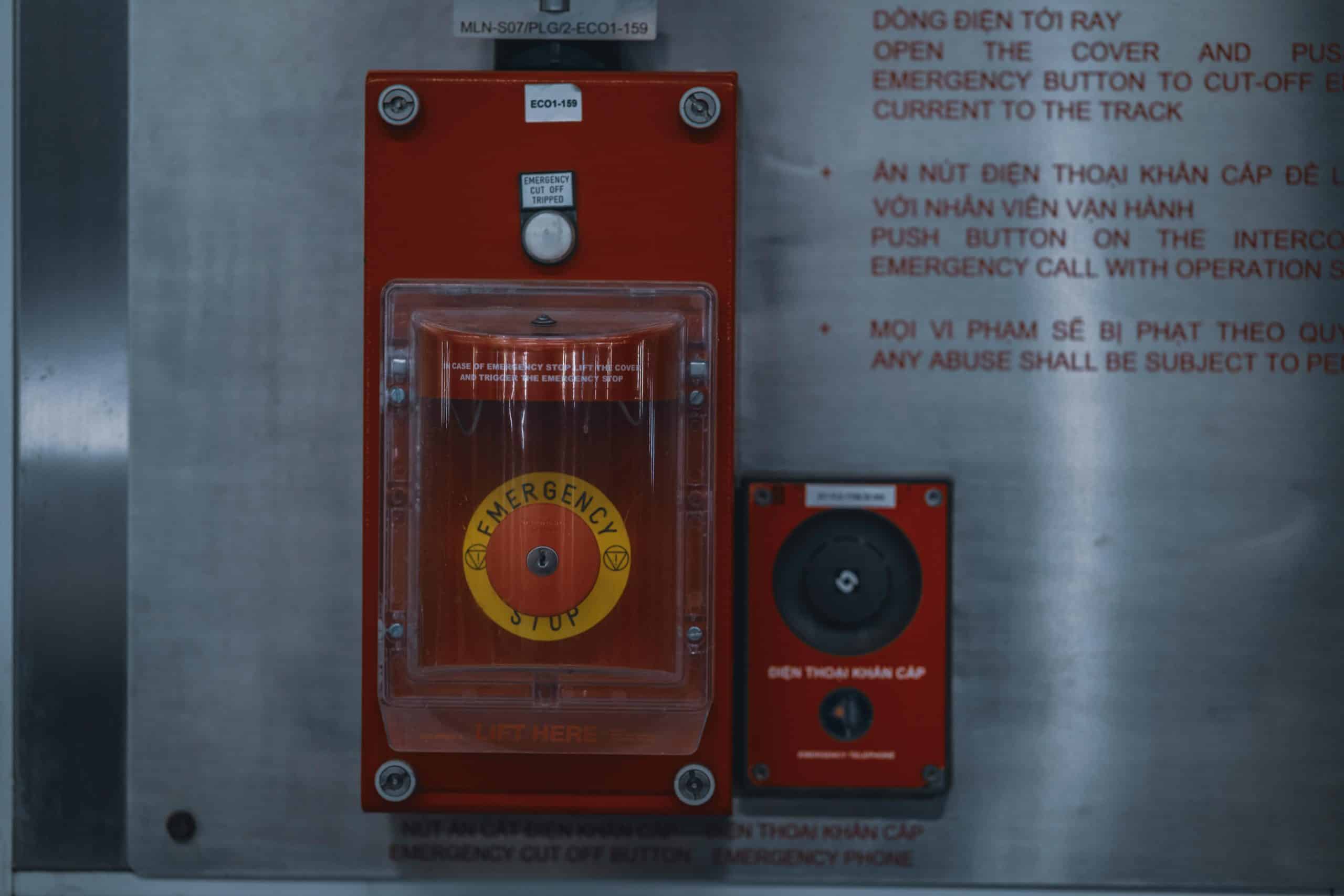
In addition to avoiding unauthorised modifications to plant and equipment guards, it is essential to check the operation and positioning of emergency stops to ensure compliance with safety regulations.

Compliance with WHS Regulations and Australian Standards

  • The Work Health and Safety (WHS) Act 2011 mandates that plant and equipment must have effective emergency stops.
  • AS/NZS 4024.1604 (Emergency Stop Principles) specifies that emergency stops must be:
    • Easily identifiable and accessible.
    • Located in positions where operators can quickly activate them.
    • Designed to override all other controls and stop the machine immediately.

Risk of Delayed Emergency Response

  • Poorly positioned or non-functional emergency stops can delay critical responses, leading to serious injuries or fatalities.
  • Regular checks ensure that emergency stops are operational and within easy reach of workers.

Prevention of Equipment Damage and Downtime

  • A functional emergency stop prevents further mechanical damage to equipment in case of malfunction.
  • Proper positioning helps reduce machine downtime and costly repairs.

Legal and Financial Consequences

  • Failure to ensure emergency stops are functional and correctly positioned may result in Safe Work Australia enforcement actions, penalties, or even prosecution.

Best Practices for Emergency Stop Checks

Visual Inspection – Ensure emergency stop buttons are clearly marked (red with a yellow background) and not obstructed.
Operational Testing – Regularly test emergency stops to confirm they work as intended.
Worker Accessibility – Ensure emergency stops are within easy reach of operators and maintenance personnel.
Training and Awareness – Educate workers on proper emergency stop usage and procedures.

Sherm Software will schedule routine Workplace Inspections to ensure plant and equipment safety guards and emergency stops are regularly tested, while Sherm’s Training and Competency module will leave employers with the peace of mind that their workers have been educated on the importance of proper emergency stop usage and procedures.

Streamline Workplace Safety with Sherm’s ISO 45001 Software

Workplace safety is critical to business success, and having the right tools to manage occupational health and safety (OHS) efficiently is essential. Sherm Software offers an advanced ISO 45001-compliant solution that streamlines safety processes, ensuring compliance, reducing risks, and fostering a proactive safety culture.

What is ISO 45001 Software?

ISO 45001 is the international standard for OHS management systems, helping businesses identify risks, control hazards, and maintain compliance with safety regulations. Traditional safety management methods often involve manual documentation and disconnected systems, leading to inefficiencies. Sherm Software simplifies these processes by automating incident reporting, risk assessments, compliance tracking, and audit management.

With a centralised, cloud-based platform, Sherm Software enables organisations to monitor safety performance, track corrective actions, and ensure seamless communication among team members. This proactive approach helps prevent workplace accidents and reinforces a culture of continuous improvement.

Why Choose Sherm Software for ISO 45001 Compliance?

Sherm Software is designed to meet the unique safety needs of businesses, offering a user-friendly platform with key features such as:

The Benefits of Implementing Sherm Software

Investing in Sherm Software brings significant advantages, including:

  • Reduced Workplace Incidents – Proactive hazard identification and risk management prevent accidents, ensuring a safer work environment.
  • Increased Efficiency – Automating OHS processes saves time, reduces administrative burdens, and improves overall productivity.
  • Improved Regulatory Compliance – Businesses remain compliant with ISO 45001 and other legal requirements, reducing risks of penalties and fines.
  • Enhanced Employee Engagement – A user-friendly platform empowers employees to report hazards, participate in safety programs, and stay informed about workplace safety.

How Sherm Software Streamlines Safety Management

Sherm Software centralises all safety data, ensuring that businesses can monitor key performance indicators (KPIs) and safety trends in real time. With built-in analytics and reporting, businesses can make data-driven decisions, optimise safety processes, and demonstrate compliance during audits.

Additionally, Sherm’s cloud-based system allows access from any device, ensuring that safety managers, supervisors, and employees can collaborate seamlessly, regardless of location. Automated workflows eliminate the need for manual record-keeping, reducing human error and ensuring that safety initiatives are executed effectively.

Invest in Workplace Safety Excellence with Sherm

Ensuring workplace safety is not just about compliance—it’s about creating a secure and productive work environment. Sherm Software provides the tools needed to manage safety proactively, reduce risks, and drive operational excellence.

By implementing Sherm’s ISO 45001 software, businesses can stay ahead of regulatory requirements, build a safety-first culture, and enhance overall performance.

Discover how Sherm Software can revolutionise your workplace safety management today!